Not that you asked, but...
I'm nearing burnout on election coverage. I know, amazing, huh?
Egg Beaters are absurdly expensive.
I'm well past burnout on financial coverage. Yes the stock market has tanked recently and our financial markets are having to regroup en masse, but the world is not ending.
Here's what I remind myself when the whiff of panic emanates from a TV news channel nearby: Stocks are best as a long term investment. Investing is a form of gambling; you can bet wisely, but you can't guarantee winning. You do not have the money associated with your stock portfolio unless/until you cash out the investment; until then it is for all intents and purposes Monopoly money.
I've discovered that Tums are as tasty as any after dinner mint. And they are a good source of calcium. Plus, they help with heartburn. Amazing, huh?
I know how it feels to lose Monopoly money in a hurry due to a series of unlucky rolls of the dice (and a brother who buys up property more aggressively than I do then lords over me when I land on that property). It sucks.
I have this parasite growing inside of me and it moves. Plus it makes me move. Involuntarily. It's a very odd sensation.
Thinking David would take the financial crisis in stride, I felt secure in knowing the world was not coming to an end. I was happy to know I didn't need to panic (when others about me were losing their heads). It's nice to have someone in your life to make you feel that way. Then David started to fret. Grrr.
I miss sleeping comfortably, restfully on my back. Very, very much.
I've never eaten so much red meat in my life as in the past 6 months. I'm actually starting to develop preferences among types of steak. Ack!
I am a big fan of odd sensations. In the past they've tended to be random enough (or not for public disclosure) that I didn't get the chance to obsess over them. At the moment I am almost encouraged to obsess over odd sensations. This can't be good.
I love Mad Men as much as ever.
My left ear has been doing this annoying vibrato thing off and on for at least a month. It does not respond to any normal ear clearing efforts. I would like it to stop.
I've been experimenting with using a traditional, multi-pocket, carry in your hand type purse. This vision of myself hasn't disturbed me yet. I know, amazing, huh?
UPDATE (Nov 3): Staying away from news for a while has allowed my natural love of election day to re-emerge; I am ready for a long election night watching returns and listening to absurd speculation. Mad Men season 2 is over and I miss it, such a well written interesting show. I've taken to carrying a few Tums tablets with me, and of course now I find my heartburn is not so bad. The experiment with traditional purse ended; it's in my bag rotation, but the oversize purse thing just isn't for me on a regular basis. Left ear stopped vibrato-ing, thank goodness. Good news: I've been able to back off on the red meat consumption. Not so good news: instead I have to take a heavy dose of iron each day to ward off anemia. But wow I'm breathing much easier now when I exercise. As always, good with bad.
October 10, 2008


October 01, 2008
Bailing for dollars
Are you sick of me sharing my love for the Freakonomics blog? Hopefully not, because they have several interesting, easily digested postings about the defeated Congressional bailout plan (read this first, then this, posted by separate contributors today).
And hopefully you know that David is dearer to me even than the Freakonomics blog. As I've mentioned before, he posted his thoughts on the market mess some time ago. Go ahead, read David's thoughts on the financial crisis, if you haven't already.
All this talk about the rejected bailout bills reminds me to put in a good word for Sunlight Foundation, an organization that encourages government processes be subject to "public input and scrutiny" (sunlight is the best disinfectant, you see). They have created a website--PublicMarkup.org--where proposed legislation is posted and the public can read and comment on it. They'd like to make this the norm, that any proposed bill be open for a period of public scrutiny before it's voted on (kind of like, don't just propose then immediately get married; it rarely works out as you expected in that moment of frenzied emotion). For a fully commented-on example, see the PublicMarkup on Senator Dodd's proposal for buying mortgage assets. Then go contribute your feedback (or read that of others) on the 110-page Senate plan, the Senate Emergency Economic Stabilization Act of 2008.
And hopefully you know that David is dearer to me even than the Freakonomics blog. As I've mentioned before, he posted his thoughts on the market mess some time ago. Go ahead, read David's thoughts on the financial crisis, if you haven't already.
All this talk about the rejected bailout bills reminds me to put in a good word for Sunlight Foundation, an organization that encourages government processes be subject to "public input and scrutiny" (sunlight is the best disinfectant, you see). They have created a website--PublicMarkup.org--where proposed legislation is posted and the public can read and comment on it. They'd like to make this the norm, that any proposed bill be open for a period of public scrutiny before it's voted on (kind of like, don't just propose then immediately get married; it rarely works out as you expected in that moment of frenzied emotion). For a fully commented-on example, see the PublicMarkup on Senator Dodd's proposal for buying mortgage assets. Then go contribute your feedback (or read that of others) on the 110-page Senate plan, the Senate Emergency Economic Stabilization Act of 2008.
September 30, 2008
Is that your final answer?
Thanks to Anne for suggesting this funny web app, which generates absurd garbled interview responses based on Sarah Palin's actual interview answers.
If you haven't caught either of the Saturday Night Live sketches featuring Tina Fey doing a dead-on parody of Palin, you are truly missing out. The first features Fey and Amy Poehler as Palin and Hillary Clinton. The second piece is Fey and Poehler as Palin and Katie Couric doing a CBS Evening News interview.
And lest you think SNL went too far in this last bit, you should know that much of Fey's dialogue consists of direct quotes from the actual interview.
If you haven't caught either of the Saturday Night Live sketches featuring Tina Fey doing a dead-on parody of Palin, you are truly missing out. The first features Fey and Amy Poehler as Palin and Hillary Clinton. The second piece is Fey and Poehler as Palin and Katie Couric doing a CBS Evening News interview.
And lest you think SNL went too far in this last bit, you should know that much of Fey's dialogue consists of direct quotes from the actual interview.
September 20, 2008
Suffering Sufragettes
Thanks to Kim for sharing Women Against Sarah Palin, a collection of women's responses to the selection of Sarah Palin as the Republican Vice Presidential nominee. I've not gotten terribly far in reading the hundreds of individual replies, but it didn't take more than a few to generate a big smile on my face. I don't necessarily agree with all the opinions shared, but I love the passion, the freedom exercised, and the variety of viewpoints. Here's one fairly typical response:
By selecting someone as inexperienced, incompetent, and intolerant as Sarah Palin, John McCain shows that he has no true concern for his nation or its citizens. He’s older and not in the best health, yet he doesn’t care if his choice means that America stands a good chance of being governed by such an inappropriate and flatly frightening person. Ladies, gentlemen: We’re not voting for someone like ourselves, who drives to soccer games or likes a beer with the guys. We’re voting for the most intelligent, able person we can find. Those people are not John McCain or Sarah Palin. One more thought: I’m tired of people who are actually anti-choice being called pro-life. No one is truly pro-life who enjoys shooting defenseless timber wolves from an airplane and draping her office couch with a huge bear skin.Now the beginning is a bit over the top, but the closing is fabulous. I too question the legitimacy of those who oppose abortion being given the label "pro life," which would seem to imply that those of us who support a woman's right to an abortion are "anti life". I also whole heartedly agree that someone being like one of us, able to hunt, or an involved parent does not inherently qualify them for the Vice Presidency. It's just not that simple, and to infer such things in campaign speeches is insulting to the voting public (who may occasionally deserve it, but still, I'd rather vote for someone who appeals to my higher tendencies than lower ones).
-Anne B., 61, Arlington, VA
- Aside # 1: The wacky connotations occasionally attached to the term "pro choice" are why I tend to prefer the bumper stickers that say "Pro Family - Pro Child - Pro Choice" to those simply proclaiming support for choice.
- Aside #1-A: Check out Urban Conservative's alternate view of the above bumper sticker. I like Adam's reply in the comments section. Hear hear.
- Aside #2: In high school a friend and I used to jokingly refer to ourselves as "pro abortion" after a classmate used the term during debate class to describe those who are in favor of choice. "Abort 'em all!" we'd cry, tongues firmly planted in cheeks. Clearly I've mellowed with age.
September 18, 2008
Jib Jab
Apparently my nephew has gotten hooked on watching JibJab videos online. I like that there's humor out there which appeals to 6 year olds and 37 year olds alike (although we might be taking different things from the experience). Anyway, check out JibJab's latest election animation short, Time for Some Campaignin', for a quick laugh.
September 17, 2008
Fiscal Incompetence
Today's Fresh Air featured a thoughtful and amusing take on the current financial crises facing banking giants and the economy as a whole. I highly recommend a listen.
Have I mentioned how frustrated I am by the fact that California does not yet have an approved state budget? The tenth largest economy in the world is over 2 months overdue on figuring out how to pay the bills for the next year! Argh.
And the United States deficit continues to grow. And we continue to import heaps of stupid (and some not so stupid) stuff and borrow money from foreign governments and exercise funky public reporting practices to ignore/avoid dealing with this growing problem. All the while infrastructure crumbles, imbalances in wealth increase, and we focus our attentions on how potential Presidents/Vice Presidents promise the moon without thinking about who else is not only useful but required in lassoing it. Double argh.
UPDATE
Lots of people blame California budget delays on the fact that the state (namely, its voters) requires a two-thirds majority in the legislature to pass each year's budget. Others get frustrated with career politicians who can't seem to think outside the box (or their district). I agree that these are part of the difficulty. But a much bigger portion of blame goes to the voters of the Golden State who continue to pass boneheaded (or well intentioned but ill conceived) ballot initiatives that tie the legislature's hands when it comes to how the budget is divvied up. See Comment section for more grievance-airing on this subject.
I've mentioned previously my love of letters to the editor. Today's San Jose Mercury News had a bunch of good examples to keep my love affair going. And one just happens to make a perfect addition to this blog posting. The following is San Jose reader Chris Bencher's (tongue-in-cheek) take on how California can get out of its financial messes just like big financial firms do:
UPDATE #2
Check out David's take on the government bailouts of financial firms. You go, David.
UPDATE #3
The credit crunch and California's slow movement to a budget have converged. Now the state is asking the US government for a $7 billion loan because its usual source of short term loans has dried up with the credit crisis (read the NY Times story). As if our existing bond-debt and fiscal short sightedness weren't sufficiently burdensome. ACKK!!!
Have I mentioned how frustrated I am by the fact that California does not yet have an approved state budget? The tenth largest economy in the world is over 2 months overdue on figuring out how to pay the bills for the next year! Argh.
And the United States deficit continues to grow. And we continue to import heaps of stupid (and some not so stupid) stuff and borrow money from foreign governments and exercise funky public reporting practices to ignore/avoid dealing with this growing problem. All the while infrastructure crumbles, imbalances in wealth increase, and we focus our attentions on how potential Presidents/Vice Presidents promise the moon without thinking about who else is not only useful but required in lassoing it. Double argh.
UPDATE
Lots of people blame California budget delays on the fact that the state (namely, its voters) requires a two-thirds majority in the legislature to pass each year's budget. Others get frustrated with career politicians who can't seem to think outside the box (or their district). I agree that these are part of the difficulty. But a much bigger portion of blame goes to the voters of the Golden State who continue to pass boneheaded (or well intentioned but ill conceived) ballot initiatives that tie the legislature's hands when it comes to how the budget is divvied up. See Comment section for more grievance-airing on this subject.
I've mentioned previously my love of letters to the editor. Today's San Jose Mercury News had a bunch of good examples to keep my love affair going. And one just happens to make a perfect addition to this blog posting. The following is San Jose reader Chris Bencher's (tongue-in-cheek) take on how California can get out of its financial messes just like big financial firms do:
Maybe feds can bail out CaliforniaBy the way, the paycheck withholding part of the above deal is attached to the actual proposed budget for California. The legislature proposes the state withhold $1.6 billion this year from state worker paychecks, thereby giving the state coffers a $1.6 billion influx of cash. Then California would refund the full amount next year in state tax returns. All I'll say in response is, please go listen to Michael Greenberger's observations about shady financing (yesterday's Fresh Air).
How about this? Let California take extra withholdings from our paychecks, which will be settled up when we do our income taxes next year. It's effectively an "interest-free loan" to the government. Then, if California does not pay us back by April 15, 2009, we impose a 12 percent interest rate. Then we'll call this a "sub-prime" loan from the people to the state.
Then, the people can have the option to sell those sub-prime loans to companies like Freddie Mac and Lehman Brothers. The federal government will bail them out when Californai defaults, and voila! We just passed the California budget problem to a federal budget problem. A perfect solution.
UPDATE #2
Check out David's take on the government bailouts of financial firms. You go, David.
UPDATE #3
The credit crunch and California's slow movement to a budget have converged. Now the state is asking the US government for a $7 billion loan because its usual source of short term loans has dried up with the credit crisis (read the NY Times story). As if our existing bond-debt and fiscal short sightedness weren't sufficiently burdensome. ACKK!!!
September 08, 2008
Justifying crankiness
Not that you asked, but I've been feeling a bit cranky this past week. Instead of going through all the reasons I ought to get over it, I thought I'd take this opportunity to go through possible root causes of my crankiness.
1. 24-hour heat. Last week here in NorCal it didn't cool down until the wee hours of the morning each night. I am not well equipped to be warm most hours of the day. I'm born and bred a Californian, acclimated to warmth during the day and coolness at night. When I first moved to Texas I did not sleep restfully for several weeks. After my general crankiness and malaise caught David's eye, he decided to crank up the A/C (normally it was set to 78 degrees, and he lowered it to, like, 70 or something--wow, huh?). A few evenings of anti-environmental indulgence and I was back to my usually cheery form (sad, but true). I do not have that option now at my place in California. Thus I have been a bit overheated and cranky as a result.
2. 24-hour election coverage. We're two months from election day and the media are already making daily predictions about the Presidential race (monthly and weekly were frustratingly pointless; daily just puts my TV in jeopardy). I saw the CNN guy doing his electoral college math this morning, placing one state in a red column and another in blue (but wait, if we switch this and this then we get yet another hypothetical result). Fox News predictably reported on the big bump in polls the Republican ticket received after Palin selection (never mind margins of error, sample size, or other statistical relevance). Enough already! Can't we just let people watch debates, read substantive issue statements, and think for themselves before voting. I know, I live in political fantasyland (which is very citizen friendly and well managed, operating under a balanced, compassionate budget, by the way). And lest you tell me to just turn the TV off, I will point out I watched none of these items directly but instead overheard them as my housemate watched.
3. 24-hour hurricane coverage. Okay, natural disasters are terrible things, wreaking havoc in mere hours or minutes. It's sad that people die or have their livelihoods destroyed by the whims of nature. And looking at real devastation after the fact has a way of reaffirming life, which does have its value. Nature is awe inspiring, and we do well not to forget that. But we do not need to spend hours and days imagining all the terrible things that could be coming, even those events that threaten us sooner rather than later. If you want to play the odds, then it's usually a safe gamble to not worry about natural disaster, as relatively few will befall any of us directly in our lifetimes. And when something bad does occur, having worried over it will not have helped get us through it. Being practical and organized and action-oriented will help a lot, on the other hand. I am tired of hearing about how horrible things could be along the Gulf Coast with each impending tropical system. Having lived there (and through a few of them), I know that residents of the area are well aware of the risks. I am okay with allowing regional authorities to work through their preparations (and hopefully learn from experience) as they see fit. I am also okay with outsiders contributing to such preparations. I am not okay with doom-and-gloom reporting about events that may or may not occur and over which I have absolutely no control. (This last item ties to one of my easiest crankiness-triggers: complaint without action. You shouldn't complain if you aren't doing something about the underlying problem.)
4. Nothing to root for? My long-admired presidential candidate has been pandering more than I'd like recently, and the election has gotten to that superficial, do-what-it-takes-to-get-our-party-in-power stage. The Republican convention speakers seemed to rely on negativity, sarcasm, and put downs, which so do not inspire me. I know all of this is what typically happens and sort of expected it, but still I feel let down. The fall television season has presented no appealing new programming (apart from that Hole in the Wall gameshow which is fun for 10 minutes then I feel a bit dirty having laughed so hard at it, so I know the appeal won't last). I've got hours of programs that have languished, unviewed and unenticing, for months on my Tivo (apart from Mad Men and Project Runway, which are a few bright spots in my tv/film viewing these days). Sports usually entertain me, but there I've experienced disappointment too. My baseball team is winding down a rather abysmal season, and my fantasy team never got out of the middle of the pack. My football team, after an encouraging preseason, started the regular season with a disappointing loss yesterday. And my dreams and ideals about our home have turned to reality and a whole lot of work. We still face future remodeling of kitchen and bathroom, with many of the requisite details to be chosen. And even then i'ts not like we're creating our dream home. *sigh*
I long for something or someone to be cheery about, something meaningful and lasting to look forward to. Maybe some private aspiration that even once it's accomplished is sort of interestingly self perpetuating. Hey, I've got the perfect solution: I'll have a baby! ;)
1. 24-hour heat. Last week here in NorCal it didn't cool down until the wee hours of the morning each night. I am not well equipped to be warm most hours of the day. I'm born and bred a Californian, acclimated to warmth during the day and coolness at night. When I first moved to Texas I did not sleep restfully for several weeks. After my general crankiness and malaise caught David's eye, he decided to crank up the A/C (normally it was set to 78 degrees, and he lowered it to, like, 70 or something--wow, huh?). A few evenings of anti-environmental indulgence and I was back to my usually cheery form (sad, but true). I do not have that option now at my place in California. Thus I have been a bit overheated and cranky as a result.
2. 24-hour election coverage. We're two months from election day and the media are already making daily predictions about the Presidential race (monthly and weekly were frustratingly pointless; daily just puts my TV in jeopardy). I saw the CNN guy doing his electoral college math this morning, placing one state in a red column and another in blue (but wait, if we switch this and this then we get yet another hypothetical result). Fox News predictably reported on the big bump in polls the Republican ticket received after Palin selection (never mind margins of error, sample size, or other statistical relevance). Enough already! Can't we just let people watch debates, read substantive issue statements, and think for themselves before voting. I know, I live in political fantasyland (which is very citizen friendly and well managed, operating under a balanced, compassionate budget, by the way). And lest you tell me to just turn the TV off, I will point out I watched none of these items directly but instead overheard them as my housemate watched.
3. 24-hour hurricane coverage. Okay, natural disasters are terrible things, wreaking havoc in mere hours or minutes. It's sad that people die or have their livelihoods destroyed by the whims of nature. And looking at real devastation after the fact has a way of reaffirming life, which does have its value. Nature is awe inspiring, and we do well not to forget that. But we do not need to spend hours and days imagining all the terrible things that could be coming, even those events that threaten us sooner rather than later. If you want to play the odds, then it's usually a safe gamble to not worry about natural disaster, as relatively few will befall any of us directly in our lifetimes. And when something bad does occur, having worried over it will not have helped get us through it. Being practical and organized and action-oriented will help a lot, on the other hand. I am tired of hearing about how horrible things could be along the Gulf Coast with each impending tropical system. Having lived there (and through a few of them), I know that residents of the area are well aware of the risks. I am okay with allowing regional authorities to work through their preparations (and hopefully learn from experience) as they see fit. I am also okay with outsiders contributing to such preparations. I am not okay with doom-and-gloom reporting about events that may or may not occur and over which I have absolutely no control. (This last item ties to one of my easiest crankiness-triggers: complaint without action. You shouldn't complain if you aren't doing something about the underlying problem.)
4. Nothing to root for? My long-admired presidential candidate has been pandering more than I'd like recently, and the election has gotten to that superficial, do-what-it-takes-to-get-our-party-in-power stage. The Republican convention speakers seemed to rely on negativity, sarcasm, and put downs, which so do not inspire me. I know all of this is what typically happens and sort of expected it, but still I feel let down. The fall television season has presented no appealing new programming (apart from that Hole in the Wall gameshow which is fun for 10 minutes then I feel a bit dirty having laughed so hard at it, so I know the appeal won't last). I've got hours of programs that have languished, unviewed and unenticing, for months on my Tivo (apart from Mad Men and Project Runway, which are a few bright spots in my tv/film viewing these days). Sports usually entertain me, but there I've experienced disappointment too. My baseball team is winding down a rather abysmal season, and my fantasy team never got out of the middle of the pack. My football team, after an encouraging preseason, started the regular season with a disappointing loss yesterday. And my dreams and ideals about our home have turned to reality and a whole lot of work. We still face future remodeling of kitchen and bathroom, with many of the requisite details to be chosen. And even then i'ts not like we're creating our dream home. *sigh*
I long for something or someone to be cheery about, something meaningful and lasting to look forward to. Maybe some private aspiration that even once it's accomplished is sort of interestingly self perpetuating. Hey, I've got the perfect solution: I'll have a baby! ;)
September 01, 2008
Wendell Berry
As I watch the presidential conventions muddle along, I find myself yearning for thoughtful, significant observations on the needs of our modern society and ideas for how best to take care of our country and people. The following final remarks in Wendell Berry's 2001 essay "Thoughts in the Presence of Fear" soothed me. I love how his prescribed worldview combines sustainability, interconnectedness, and simplicity.
XXI. What leads to peace is not violence but peaceableness, which is not passivity, but an alert, informed, practiced, and active state of being. We should recognize that while we have extravagantly subsidized the means of war, we have almost totally neglected the ways of peaceableness. We have, for example, several national military academies, but not one peace academy. We have ignored the teachings and the examples of Christ, Gandhi, Martin Luther King, and other peaceable leaders. And here we have an inescapable duty to notice also that war is profitable, whereas the means of peaceableness, being cheap or free, make no money.If you'd like to read more by Berry then I heartily recommend his collection of essays Sex, Economy, Freedom, and Community. There you'll find he is strongly in favor of family, marriage, and community. He never hides his feelings about the need to emphasize local business and agrarian economies over any sort of global trade or industrialization. He's rather strongly against computers and other currently popular technologies (he is very concerned about easy access to information out of context). And he's a content Christian pacifist from Kentucky who embraces rather than runs from learning about other places and philosophies. A pretty cool guy, I think.
XXII. The key to peaceableness is continuous practice. It is wrong to suppose that we can exploit and impoverish the poorer countries, while arming them and instructing them in the newest means of war, and then reasonably expect them to be peaceable.
XXIII. We must not again allow public emotion or the public media to caricature our enemies. If our enemies are now to be some nations of Islam, then we should undertake to know those enemies. Our schools should begin to teach the histories, cultures, arts, and language of the Islamic nations. And our leaders should have the humility and the wisdom to ask the reasons some of those people have for hating us.
XXIV. Starting with the economies of food and farming, we should promote at home, and encourage abroad, the ideal of local self-sufficiency. We should recognize that this is the surest, the safest, and the cheapest way for the world to live. We should not countenance the loss or destruction of any local capacity to produce necessary goods
XXV. We should reconsider and renew and extend our efforts to protect the natural foundations of the human economy: soil, water, and air. We should protect every intact ecosystem and watershed that we have left, and begin restoration of those that have been damaged.
XXVI. The complexity of our present trouble suggests as never before that we need to change our present concept of education. Education is not properly an industry, and its proper use is not to serve industries, either by job-training or by industry-subsidized research. It's proper use is to enable citizens to live lives that are economically, politically, socially, and culturally responsible. This cannot be done by gathering or "accessing" what we now call "information" - which is to say facts without context and therefore without priority. A proper education enables young people to put their lives in order, which means knowing what things are more important than other things; it means putting first things first.
XXVII. The first thing we must begin to teach our children (and learn ourselves) is that we cannot spend and consume endlessly. We have got to learn to save and conserve. We do need a "new economy", but one that is founded on thrift and care, on saving and conserving, not on excess and waste. An economy based on waste is inherently and hopelessly violent, and war is its inevitable by-product. We need a peaceable economy.
August 18, 2008
The lost art of subtlety
Hmm, do you think the Washington Post's honored editorial cartoonist Pat Oliphant, whose current message piece is shown below, supports John McCain for President?


Guns
I usually enjoy Morgan Spurlock's "walk a mile in another person's shoes" television show 30 Days. Sometimes the episodes are really thought provoking, such as when a professional athlete lived life as a paraplegic in a wheelchair for the month, or when a laid off employee traveled to India to see who would be taking his job ("Outsourcing").
The best episodes are probably those in which Spurlock himself is immersed in some new activity/place for 30 days. The last episode to air had him living on the Navajo Reservation for the month. At the beginning of this season he was shown working in the coal mines of his native West Virginia. Last season he spent a month in jail, and in the series premiere he and his girlfriend lived on minimum wage for 30 days.
Sometimes the show misses, as when a mother took up binge drinking to better understand (and control) her daughter's college/party lifestyle ("Binge Drinking Mom"), or when a Mormon woman went to live with a family headed by two gay men ("Same Sex Parenting").
Still, 30 Days is almost always more interesting than whatever else is on in its time slot, even when the episode is unsuccessful at revealing any breakthroughs. But one episode recently got me so riled up in the first five minutes that I couldn't even watch it. It sent a gun control advocate to live with a father-son pair of gun enthusiasts ("Gun Nation"). I'm pondering what this says about me, and whether to be concerned about it or not. In the meantime, here's a lovely gun related headline to share:
The best episodes are probably those in which Spurlock himself is immersed in some new activity/place for 30 days. The last episode to air had him living on the Navajo Reservation for the month. At the beginning of this season he was shown working in the coal mines of his native West Virginia. Last season he spent a month in jail, and in the series premiere he and his girlfriend lived on minimum wage for 30 days.
Sometimes the show misses, as when a mother took up binge drinking to better understand (and control) her daughter's college/party lifestyle ("Binge Drinking Mom"), or when a Mormon woman went to live with a family headed by two gay men ("Same Sex Parenting").
Still, 30 Days is almost always more interesting than whatever else is on in its time slot, even when the episode is unsuccessful at revealing any breakthroughs. But one episode recently got me so riled up in the first five minutes that I couldn't even watch it. It sent a gun control advocate to live with a father-son pair of gun enthusiasts ("Gun Nation"). I'm pondering what this says about me, and whether to be concerned about it or not. In the meantime, here's a lovely gun related headline to share:
Small Texas school district lets teachers, staff pack pistolsCome on, you know you want to read the whole story at Star-Telegram.com. Then come back here and share your thoughts.
Summer
Sorry I've been away for so long. I've been keeping myself occupied pondering politics and the California state budget (or lack thereof). I've also been busy backing up computer files (not one but both computers are acting odd). And of course I've spent a bit of time grumbling over NBC's choices for how to use primetime coverage of the Olympics. Then again, I've stayed up too late on several occasions watching said coverage, flipping channels as I awaited the two 5-minute segments I cared about in the 4-hour broadcast. And I've spent much more time than that sorting through seemingly regenerative piles of junk in our house, continuing our quest to have space to park at least 1 car in the garage and know where all desirable articles of clothing are without embarking on an archaeological dig (my standards aren't too high, are they?). Then there's cooking and cleaning and laundry and bill paying and filing and grocery shopping and family tending. Yes, I believe regular chores have been the biggest time sucker lately. And, ahem, working on dissertation stuff too, naturally.
But don't despair, for I've also had some fun lately. I went to the Santa Cruz Beach Boardwalk briefly yesterday and plan to do so again tomorrow. The weather's been gorgeous lately. I've been swimming regularly and am feeling comfortably back into my water exercise routine. I planted pretty (albeit some would say illicit) little flowers by my front door and have been tending several surprise tomato plants out back (or at least managing to do as well for them as the very poor starting soil will allow). I saw The Mummy 3 and was able to just enjoy the silliness rather than spend two hours critiquing and rolling my eyes (a major feat, there). I enjoyed the Niners victory Saturday night at Candlestick. And I've spent time with many friends and family in the past few weeks, whether floating around a swimming pool, in the hospital or at a birthday party in the park, over a losing game of Bingo, or just together for a casual meal.
So as summer approaches its unofficial close, I am happy to report it's been a good one. I hope yours has been good too.
But don't despair, for I've also had some fun lately. I went to the Santa Cruz Beach Boardwalk briefly yesterday and plan to do so again tomorrow. The weather's been gorgeous lately. I've been swimming regularly and am feeling comfortably back into my water exercise routine. I planted pretty (albeit some would say illicit) little flowers by my front door and have been tending several surprise tomato plants out back (or at least managing to do as well for them as the very poor starting soil will allow). I saw The Mummy 3 and was able to just enjoy the silliness rather than spend two hours critiquing and rolling my eyes (a major feat, there). I enjoyed the Niners victory Saturday night at Candlestick. And I've spent time with many friends and family in the past few weeks, whether floating around a swimming pool, in the hospital or at a birthday party in the park, over a losing game of Bingo, or just together for a casual meal.
So as summer approaches its unofficial close, I am happy to report it's been a good one. I hope yours has been good too.
July 28, 2008
Profit from this
In his bestselling business management book Good to Great, Jim Collins implies that there are companies which can perform well almost indefinitely. The boom-to-bust cycle can be curtailed, it would seem, if a company focuses in on what it's intended for and has the right people on board. These are nice, reasonable ideas and make good business sense overall, but can adherence to them truly predict greatness? According to Freakonomics co-author Steven Levitt, the answer in this case is no. Most of the "great" eleven companies profiled in the book are as much affected by up and down performance cycles as any company.
My question is, can anything predict an organization's ability to get to or remain at the top of the game? How often does any of us experience true "greatness" in our lives? Is it reasonable to assume it can be predicted, as if controllable? What do we gain and lose with attempts to make it happen? Something to ponder as you read From Good to Great...to Below Average. Then I encourage you to check out the Business Pundit's very reasonable (imho) review of books like Good to Great.
My question is, can anything predict an organization's ability to get to or remain at the top of the game? How often does any of us experience true "greatness" in our lives? Is it reasonable to assume it can be predicted, as if controllable? What do we gain and lose with attempts to make it happen? Something to ponder as you read From Good to Great...to Below Average. Then I encourage you to check out the Business Pundit's very reasonable (imho) review of books like Good to Great.
July 21, 2008
No malfunction here
Finally, some sanity to report. A federal appeals court threw out the FCC's $550,000 fine levied against CBS three years ago for Janet Jackson's alleged "wardrobe malfunction."
July 17, 2008
Is it elitist to say this whole thing is ridiculous?
The cover of The New Yorker this week--the July 14 issue depicting the Obamas surrounded by evidence of various false rumors--was, I thought, kind of funny. Not hilarious, mind you, but certainly not completely un-funny. Unfortunately I did not get to arrive at this conclusion before I had been told 12 ways how offensive it was. Apparently no one in the media who commented on the cover is an actual reader of the magazine (hello, context). Fortunately I can think for myself and can take political art with a grain of salt and a sense of humor.
I understand where artist Barry Blitt took a risk. Clearly not everyone has been following the easily disproven rumors that have been circulated concerning Barack Obama. David's grandfather thought the cover was terrible; I feel I should add that he is not a New Yorker reader and only heard about the cartoon from the story's heavy rotation on TV. When we discussed it over lunch I realized that where I saw a picture poking fun at all the absurd allegations and conjectures about our democratic Presidential nominee, he saw an artist promoting such allegations and conjectures.
As a political cartoonist I'd say it's Blitt's job to push the envelope, and sometimes it works better than others. While this one probably helped the New Yorker sell more newsstand copies, it probably won't go down as one of Blitt's best loved works. Consideration for that honor ought to go to Blitt's October 2007 New Yorker cover depicting Iranian President Ahmadinejad in a foot-tapping bathroom stall. Now that was some clever political-fun poking.
To finish things off I encourage you to check out a few other elitist funnies right after you read a bit more about charges of elitism in general.
I understand where artist Barry Blitt took a risk. Clearly not everyone has been following the easily disproven rumors that have been circulated concerning Barack Obama. David's grandfather thought the cover was terrible; I feel I should add that he is not a New Yorker reader and only heard about the cartoon from the story's heavy rotation on TV. When we discussed it over lunch I realized that where I saw a picture poking fun at all the absurd allegations and conjectures about our democratic Presidential nominee, he saw an artist promoting such allegations and conjectures.
As a political cartoonist I'd say it's Blitt's job to push the envelope, and sometimes it works better than others. While this one probably helped the New Yorker sell more newsstand copies, it probably won't go down as one of Blitt's best loved works. Consideration for that honor ought to go to Blitt's October 2007 New Yorker cover depicting Iranian President Ahmadinejad in a foot-tapping bathroom stall. Now that was some clever political-fun poking.
To finish things off I encourage you to check out a few other elitist funnies right after you read a bit more about charges of elitism in general.
- MUST READ: Jon Stewart on The Daily Show had a hilarious take on the latest New Yorker cover, including a fabulous response suggestion for the Obama camp.
- Daily Kos posting, The New Yorker Cover: An Anti-Elitist Opportunity
- And two more elitist New Yorker cartoons: one and two. (It's okay to label them as such; they use the word themselves.)
July 15, 2008
Drilling down
Take a look at this informative little financial opinion piece from The New Yorker on why oil prices are so high. After outlining a number of reasonable points, the author asserts that:
And on to a related topic...
Expanding offshore oil drilling alone will never solve our energy problems. Even if it were to be expanded (and politically, environmentally, and financially this is a huge longshot), the impact would be relatively small and not immediate (estimates vary, but the amount of oil and gas the industry itself predicts could be harnessed might get us only two years' worth of supply--then what do we do for a fix?). We might feel better in the short term by expanding drilling offshore, just because we took some action over which we seem to have control (it's a domestic bandage of sorts), but a year or two from now we will have moved on to whatever our latest insecurity is and not necessarily fixed the underlying need for the bandage. I don't think the environmental risk of drilling and piping-in is worth taking just so I can feel better for a few months, especially as it won't have effected a substantive solution whatsoever.
So expanded offshore drilling is not going to supply enough oil and natural gas to make an appreciable difference in energy prices for long enough to be significant, and once it’s used it’s gone (aka it is completely non-renewable). What are we supposed to do then? Oil is a one-trick pony (or Clydesdale horse, as the case may be); aren’t there other options we can expand upon? That’s what I want to hear people talk about—realistic, get started now, varied solution plans. What I’m sick of hearing about is how tough we all have it (I got it, can we move on now?), predictions of just how high gas/crude oil can/will go (predicting earthquakes holds about as much appeal for me—why do I want to constantly hear about something that might happen instead of living my life, which really is happening?), and arguments about whether offshore drilling is good or bad (there are other options, people, so get your heads out of your bottoms!).
Maybe when it comes to this latest oil/fuel price crisis we're both over-reacting and under-reacting. One on hand, the price of gas is in many ways out of our control, and what's the point worrying over things out of our control? On the other hand there's something we can very much influence: public policy. Last I checked, we live in a representative democracy, electing our public officials and voting not only in private at a ballot box a few times a year (assuming you take advantage of this nice privilege), but also in how we spend our money, how and how often we publicly state our opinions, and what news we choose to read. Imagine what would happen if we all started educating ourselves about government policies and practices?
Sorry, I’m just getting a bit tired of negative news and hype, people selfishly complaining but not taking care of themselves or contributing to meaningful solutions. *sigh*
I recommend these interesting reads, for your edification on the gas/oil/energy issues that are undeniable, if occasionally overhyped:
none of the problems that have driven up the price of oil lend themselves to a quick fix, and most, like the boom in global demand and the inaccessibility of certain oil fields, aren’t under our control at all.Now go read what the Freakonomics guys have to say about why rising gas prices are so disturbing to us. Notice any similarities in the source of panic?
And on to a related topic...
Expanding offshore oil drilling alone will never solve our energy problems. Even if it were to be expanded (and politically, environmentally, and financially this is a huge longshot), the impact would be relatively small and not immediate (estimates vary, but the amount of oil and gas the industry itself predicts could be harnessed might get us only two years' worth of supply--then what do we do for a fix?). We might feel better in the short term by expanding drilling offshore, just because we took some action over which we seem to have control (it's a domestic bandage of sorts), but a year or two from now we will have moved on to whatever our latest insecurity is and not necessarily fixed the underlying need for the bandage. I don't think the environmental risk of drilling and piping-in is worth taking just so I can feel better for a few months, especially as it won't have effected a substantive solution whatsoever.
So expanded offshore drilling is not going to supply enough oil and natural gas to make an appreciable difference in energy prices for long enough to be significant, and once it’s used it’s gone (aka it is completely non-renewable). What are we supposed to do then? Oil is a one-trick pony (or Clydesdale horse, as the case may be); aren’t there other options we can expand upon? That’s what I want to hear people talk about—realistic, get started now, varied solution plans. What I’m sick of hearing about is how tough we all have it (I got it, can we move on now?), predictions of just how high gas/crude oil can/will go (predicting earthquakes holds about as much appeal for me—why do I want to constantly hear about something that might happen instead of living my life, which really is happening?), and arguments about whether offshore drilling is good or bad (there are other options, people, so get your heads out of your bottoms!).
Maybe when it comes to this latest oil/fuel price crisis we're both over-reacting and under-reacting. One on hand, the price of gas is in many ways out of our control, and what's the point worrying over things out of our control? On the other hand there's something we can very much influence: public policy. Last I checked, we live in a representative democracy, electing our public officials and voting not only in private at a ballot box a few times a year (assuming you take advantage of this nice privilege), but also in how we spend our money, how and how often we publicly state our opinions, and what news we choose to read. Imagine what would happen if we all started educating ourselves about government policies and practices?
Sorry, I’m just getting a bit tired of negative news and hype, people selfishly complaining but not taking care of themselves or contributing to meaningful solutions. *sigh*
If you choose not to decide,
You still have made a choice.
--from "Freewill" by Rush
I recommend these interesting reads, for your edification on the gas/oil/energy issues that are undeniable, if occasionally overhyped:
- Take a look at the article from The New Yorker entitled The Island in the Wind for an example of how a community of apathetic skeptics turned the idea of renewably energy into a successful, proud local enterprise
- Check out the Energy Information Administration, out of the Dept of Energy, for facts on the United States’ sources of crude oil and refined petroleum products.
- Follow this discussion about the gasoline market (warning, it's a bunch of economists)
- Read this progressive policy take on Gas Prices: Why Our “Free-Market” Economy is Anything but Free
July 11, 2008
Escape
I don't have a comfy air conditioned office to escape to these days, so when the heat wave struck this week I instead escaped to the movie theater. Apart from the negative cash flow aspect of such a plan, it's quite a nice way to spend one's weekday afternoon, dontcha think?
Wall-E
I could watch the character of WALL-E all day. He's just a trash compacting robot continuing to clear Earth of the mountains of trash that choked the planet and ultimately drove its remaining human inhabitants into space. But he's so darn cute. WALL-E is, alas, lonely, sharing his days and nights with an indestructible cockroach and a well organized collection of intriguing or useful objects. At the end of each workday he stows the day's findings in his trailer and dreams (with help from repeated viewings of Hello Dolly) of finding someone to love.
It's not surprising to us the viewers that just such a love interest arrives one day. EVE has come to scan Earth for signs of life, and her shiny, round sleekness entices WALL-E immediately. The majority of the film focuses on the classic romantic pursuit of WALL-E attempting to gain EVE's attention, affection, and hand. They travel far in space (apparently in a very short time, but I won't quibble) to dock with the cruise ship Axiom which houses Earth's human-evacuee descendants. Some hijinks ensue over control of the specimen EVE has brought back with her. There's also a rather unsubtle storyline about getting off one's bum and appreciating/working for what we have.
The ending could have turned bittersweet but instead is predictably hopeful. (As an aside, I'd love to see a darker ending released, as I think the final message could be more powerful, if less kiddie-friendly, but I know that ain't never gonna happen.) You can read and analyze all the detail you like about the storyline, but ultimately the charm of this film is firmly planted in liking and rooting for the character of WALL-E who--have I mentioned it?--is adorable. This latest Pixar offering is lovely from the get-go, and charming for all ages. Highly recommended.
The Visitor
There's nothing particularly remarkable or surprising about this quiet independent film, though I enjoyed it. The Visitor tells the story of college professor Walter Vale's gradual awakening from the fog of his adult life. Widowed and teaching courses by rote, Walter's bland existence is interrupted when he is forced into attending a conference in New York and finds two illegal immigrants in his long-unused apartment. He generously allows the harmless looking couple to stay until they can find a new place. The man, Tarek, is friendly to Walter, teaching him the joys of drumming, while Tarek's girlfriend Zainab is wary. When Tarek is detained by immigration and threatened with deportation, Walter becomes involved and along the way uncovers the passion he needs to move on with his life.
The Visitor is a nice movie, well acted and well paced. What is maybe nicest about it is that it gives veteran actor Richard Jenkins the chance to lead. The frustrations of impersonal immigration and detention policies probably won't surprise you, and the likelihood of finding innocent people living illegally in one's apartment are unreal, but these issues don't cloud the relating of Walter's overall journey. Recommended to fans of simple, independent movies.
Wall-E
I could watch the character of WALL-E all day. He's just a trash compacting robot continuing to clear Earth of the mountains of trash that choked the planet and ultimately drove its remaining human inhabitants into space. But he's so darn cute. WALL-E is, alas, lonely, sharing his days and nights with an indestructible cockroach and a well organized collection of intriguing or useful objects. At the end of each workday he stows the day's findings in his trailer and dreams (with help from repeated viewings of Hello Dolly) of finding someone to love.
It's not surprising to us the viewers that just such a love interest arrives one day. EVE has come to scan Earth for signs of life, and her shiny, round sleekness entices WALL-E immediately. The majority of the film focuses on the classic romantic pursuit of WALL-E attempting to gain EVE's attention, affection, and hand. They travel far in space (apparently in a very short time, but I won't quibble) to dock with the cruise ship Axiom which houses Earth's human-evacuee descendants. Some hijinks ensue over control of the specimen EVE has brought back with her. There's also a rather unsubtle storyline about getting off one's bum and appreciating/working for what we have.
The ending could have turned bittersweet but instead is predictably hopeful. (As an aside, I'd love to see a darker ending released, as I think the final message could be more powerful, if less kiddie-friendly, but I know that ain't never gonna happen.) You can read and analyze all the detail you like about the storyline, but ultimately the charm of this film is firmly planted in liking and rooting for the character of WALL-E who--have I mentioned it?--is adorable. This latest Pixar offering is lovely from the get-go, and charming for all ages. Highly recommended.
The Visitor
There's nothing particularly remarkable or surprising about this quiet independent film, though I enjoyed it. The Visitor tells the story of college professor Walter Vale's gradual awakening from the fog of his adult life. Widowed and teaching courses by rote, Walter's bland existence is interrupted when he is forced into attending a conference in New York and finds two illegal immigrants in his long-unused apartment. He generously allows the harmless looking couple to stay until they can find a new place. The man, Tarek, is friendly to Walter, teaching him the joys of drumming, while Tarek's girlfriend Zainab is wary. When Tarek is detained by immigration and threatened with deportation, Walter becomes involved and along the way uncovers the passion he needs to move on with his life.
The Visitor is a nice movie, well acted and well paced. What is maybe nicest about it is that it gives veteran actor Richard Jenkins the chance to lead. The frustrations of impersonal immigration and detention policies probably won't surprise you, and the likelihood of finding innocent people living illegally in one's apartment are unreal, but these issues don't cloud the relating of Walter's overall journey. Recommended to fans of simple, independent movies.
June 16, 2008
Extra Feet
Scanning world headlines, this one caught my eye:
VANCOUVER, British Columbia - Yet another human foot has washed up along the British Columbia coast.Gee, do you think there could be a connection?
Police in southwestern British Columbia say a left foot was found partially submerged in water on Westham Island, south of Vancouver, Monday morning.
It's the fifth foot in less than a year that has washed up on shorelines along islands in British Columbia
The four previous feet were all right feet wearing socks and shoes, and two of them were size 12.
The last one was found on May 22 on Kirkland Island in the Fraser River.
Police are trying to see if they are linked.
June 04, 2008
South Bay living
Did you follow our spring house hunt, in which we looked for a house to settle into on the Peninsula? If so you might have been surprised to read we are in fact moving to a townhouse on the outskirts of Los Gatos. The short explanation is that this simplifies things. We already owned the place in LG, and decided a sure thing in the SouthBay was worth more than potential on the Peninsula (though we did look at some lovely homes). The decision making process was a bit of a roller coaster, and I'm ever so grateful to our patient and understanding families.
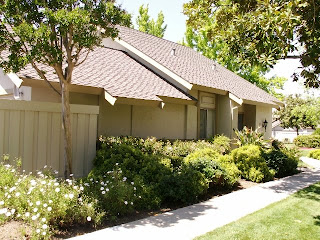 So this weekend we finalize our move from comfortable temporary lodgings at my dad's condo in Santa Clara, to the light-filled two-story townhome we purchased from David's grandfather Verl five years ago. And next week Verl will be joining us, moving back to the area from Santa Rosa, where he retired after David moved to Texas. In preparation we've been fortifying the insulation, making some changes for Verl, planting a few summer veggies in the patio area (thanks Pauline!), arranging (or finding new homes for) our furniture and stuff, and planning for several major updates (among the 1973-era appliances are the dishwasher and air conditioner, items which were undoubtedly quite luxurious back in the day).
We look forward to living there. We also look forward to having guests and parties and Sunday night dinners and movie nights and anything else that keeps us in touch with our friends. I hope you'll join us.
P.S. I would be remiss if I did not mention my joy over Obama's speech last night. Left me positively verklempt.
 So this weekend we finalize our move from comfortable temporary lodgings at my dad's condo in Santa Clara, to the light-filled two-story townhome we purchased from David's grandfather Verl five years ago. And next week Verl will be joining us, moving back to the area from Santa Rosa, where he retired after David moved to Texas. In preparation we've been fortifying the insulation, making some changes for Verl, planting a few summer veggies in the patio area (thanks Pauline!), arranging (or finding new homes for) our furniture and stuff, and planning for several major updates (among the 1973-era appliances are the dishwasher and air conditioner, items which were undoubtedly quite luxurious back in the day).
We look forward to living there. We also look forward to having guests and parties and Sunday night dinners and movie nights and anything else that keeps us in touch with our friends. I hope you'll join us.
P.S. I would be remiss if I did not mention my joy over Obama's speech last night. Left me positively verklempt.
June 02, 2008
Birthday Countdown
For those of you not in the know, we are moving to Los Gatos next week. Also, my birthday is coming. Consider yourself informed.
We returned yesterday from our road trip to Oregon. (Check out selected pics.) A few highlights:
We returned yesterday from our road trip to Oregon. (Check out selected pics.) A few highlights:
- We drove up I-5 and down 101 and stayed in three Oregon towns: Medford, Seaside, and Newport. We learned a lot about local history, bought virtually nothing but food, and decided the Prius is not the car for us.
- Oregon's beaches are absolutely gorgeous--sandy, long, easily accessed, and numerous. (They also happen to be lapped by some of the coldest water you'll ever not stick your toe into.)
- Oregon is very hilly.
- I loved the Japanese Gardens in Portland, where the free tour was particularly helpful in showcasing the careful planning of this delightful park. But don't talk on your cell phone while inside.
- I imagine the smell of thousands of roses in full bloom at the famed International Rose Test Garden must be overwhelming on a sunny day. I wouldn't know, as there was neither blooming nor sunshine going on the day we passed through.
- There's a thriving beachtown industry on the Oregon coast, offering all levels of comfort, from hike-in camping and trails to large hotels and vacation home rentals.
- Gasoline is strictly full-serve in Oregon, and prices are still at least $0.25 cheaper per gallon than in California.
- If you like clam chowder, fish and chips, and oysters then you will be well fed on the Oregon coast.
- If you like coffee, then the many non-Starbucks drive through coffee businesses will keep you well caffeinated while in the state.
- S'mores can be made quite satisfactorily in a microwave.
Titled
Not that you asked, but...
We have been engaged in a battle of wills with the Virginia Department of Motor Vehicles for over a decade now, trying to get the title to our Subaru. Well, had been. Today, finally, the Subaru is truly ours.
This would be the car we've driven for almost 13 years. The one that has been registered to us in four states (counting CA twice). The car that has taken us across the country three times, accumulating more than 175,000 miles along the way. The car we paid off a decade ago. The car which I thought of as the first car I'd ever owned, but that was never legally mine because of inexplicable, bureaucratic confusion (mostly on DMV's end).
Right before we left for Oregon, we received the long-anticipated title from Virginia. I had thoughts of photographing it as a keepsake before turning it in to CA DMV, but when the moment came I was too excited and forgot to get the pic. Instead I rushed over to trade in my massive pile of stapled forms for one receipt and two license plates (which were being held hostage until said title arrived). The woman who helped me laughed at my enhusiasm (she probably doesn't see many people truly excited to be at DMV). But I don't care, because now the "Bubaru" is a recognized member of our family (yes, along with Pavel and Chester and Triple G and all the other non-sentient beings who inhabit our world).
We have been engaged in a battle of wills with the Virginia Department of Motor Vehicles for over a decade now, trying to get the title to our Subaru. Well, had been. Today, finally, the Subaru is truly ours.
This would be the car we've driven for almost 13 years. The one that has been registered to us in four states (counting CA twice). The car that has taken us across the country three times, accumulating more than 175,000 miles along the way. The car we paid off a decade ago. The car which I thought of as the first car I'd ever owned, but that was never legally mine because of inexplicable, bureaucratic confusion (mostly on DMV's end).
Right before we left for Oregon, we received the long-anticipated title from Virginia. I had thoughts of photographing it as a keepsake before turning it in to CA DMV, but when the moment came I was too excited and forgot to get the pic. Instead I rushed over to trade in my massive pile of stapled forms for one receipt and two license plates (which were being held hostage until said title arrived). The woman who helped me laughed at my enhusiasm (she probably doesn't see many people truly excited to be at DMV). But I don't care, because now the "Bubaru" is a recognized member of our family (yes, along with Pavel and Chester and Triple G and all the other non-sentient beings who inhabit our world).
May 12, 2008
News and Amusements
Today's topics:
I've grown fond of Countdown with Keith Olbermann. Granted when I watch I tend to do so in fast forward, skipping most of the longer segments (I'm not generally a fan of ratings-focused network news; for more balanced, in-depth current events reporting and analysis I strongly recommend you check out The NewsHour and The World). But Olbermann is always free with his opinions in an amusing way, he genuinely seems to care about important issues, and he does raise some good points. And his Worse, Worser, Worst Person of the Day bit at the end of the news countdown is hilarious (albeit often anti-Bush Administration). It's not must-see TV, but it's certainly entertaining. Recommended to liberals and news junkies.
[Warning: I have maybe a higher than average tolerance for graphic--but nonviolent--stories, and others might not like the visual imagery involved in this next paragraph. There, you've been warned....]
Do I live in a weird-news bubble? No one I've asked seems to recall the last time a woman was found on a toilet and had to be removed from the home with outside assistance. Apparently the boyfriend of this 35-year old woman left her sitting for two years because she wanted to be left there. Apparently the boyfriend has no sense of his own. She was there so long that her skin had overgrown the seat (which I can easily imagine, having had a similar skin growth experience with earrings when I was a kid, but that story is for another time). Think that's bad? The latest toilet story involved a 90-year old woman who died on the toilet and was left there for 2 months! Yuck. And it's not like she lived alone; since the woman was on the only toilet in the house, the household had to use a bucket (you can guess for what). They left her there because they thought she wasn't completely dead and they could pray her back to life. What?!
I was struck by this odd double-play of toilet victims, but apparently no one else I know was. Of course, I thought absolutely everyone within hearing distance of a TV or radio would have learned about the Austrian man who fathered 6 kids with his allegedly missing daughter (if you don't know the story I won't share it here). And yet my own brother hadn't heard. And David hadn't heard of it until I told him. (As I was relating the story to my brother, his jaw stuck open in shock, he looked to David who just said, "Oh it gets worse.")
Apparently I am drawn to news of the weird in a way that is not shared by those closest to me. I will thus keep further wacky news to myself and dedicate the remainder of today's posting to more erudite offerings, like public radio, documentaries, and explorations of religious life, in the hopes that I am somewhat redeemed in your eyes. :)
If you've read about the tornado in Picher, Oklahoma, then you probably also read that the town is a Superfund site. There was an interesting documentary about Picher called The Creek Runs Red, which aired on the public television series Independent Lens last fall. It tells the story of the birth and death of Picher's now-we-know-it's-toxic lead mining industry, and the government's recent efforts to empty the area of inhabitants. Many people chose to stay, either for financial or personal history reasons, and the filmmakers do a good job of highlighting the complexity of toxic cleanups in established communities, especially poorer ones. Ah, environmental justice.
The Creek Runs Red is just one of many fascinating documentaries aired on Independent Lens, and I would recommend many others for your viewing pleasure. David and I enjoyed the endearingly simple King Corn recently, even though most of its lessons about modern agricultural production can be learned just as well elsewhere. I was really touched by Hard Road Home, which shows the work of a New York City organization started by an enterprising ex convict dedicated to helping other ex-cons get on with productive lives; alas, as you might expect, it's not all happily ever after. Or check out Knocking to learn more about Jehovah's Witnesses (some of your assumptions about them just might be wrong). I coud go on and on; the series has showcased years' worth of award winning documentaries on every subject under the sun. I highly recommend it.
Fresh Air with Terry Gross has been particularly good lately. It's a daily radio program that airs on NPR stations around the country. Terry (or her guest host) invites writers, musicians, actors, filmmakers, journalists and other observers and creators of interesting stuff to talk about their work for 20-40 minutes. Last Thursday on Fresh Air the guest was Adam Liptak, who contributes articles to the New York Times series American Exception, comparing the American justice system with practices around the world. While the topic could easily turn divisive (we're worse, they're better, and vice versa), Liptak is actually quite guarded in drawing conclusions about which are better approaches. Our way of policing crimes is different from other places, he points out; what I got from him was that it's more interesting (and useful) to contemplate "Why?" and "To what end?" than to assess anyone as better or worse. Back in March, after the whole Obama-Wright brouhaha erupted, Terry spoke with several insiders in the field of Black Liberation Theology, the brand of sermonizing Wright was associated with before becoming something of his own brand. Far from offering an excuse for Wright's words, Dwight Hopkins (talking to Terry on March 31) did contextualize some of them, and provided intriguing insight into the religious and cultural roots of traditional black church sermons. I recommend both of these programs, and Fresh Air in general (subscribe to the Fresh Air podcast, or just listen to the pieces on history of Black Liberation Theology and comparative justice).
I make a point of decompressing my mind (figuratively, not literally) before going to sleep, and amusing bedtime reading is essential in that process. Lately I'd been plowing through a lot of cheesy fiction before hitting a cheesy-fiction wall; then the heavens opened and my inbox notified me that one of my several new book requests at the library had been fulfilled, after months of waiting. The Year of Living Biblically: One Man's Humble Quest to Follow the Bible as Literally as Possible is so amusing it's become not only bedtime reading but also start-the-morning-with-a-smile reading as well. In this non-fiction, diary-style book, A.J. Jacobs describes his one-year mission to live the rules of the Old and New Testaments as faithfully as is reasonable in modern times. Some rules were easy to adhere to (and contemplating them offers a nice cultural history lesson, plus a healthy dollop of appreciation for modern living); other rules however were virtually impossible to avoid breaking (and the author's descriptions of trying are some of the funniest moments of the book). The Year of Living Biblically does start a bit unevenly, but I think that once you get the gist of what he's doing and why, it's really quite a nice combo of enlightening and entertaining. Recommended to anyone interested in religion and modern life.
- Counting down the news
- Stuck on the toilet (aka News of the Weird)
- A tornado and a Superfund site in Picher, OK
- Documentaries in the comfort of your living room
- Learning from the radio
- Learning from a funny book
I've grown fond of Countdown with Keith Olbermann. Granted when I watch I tend to do so in fast forward, skipping most of the longer segments (I'm not generally a fan of ratings-focused network news; for more balanced, in-depth current events reporting and analysis I strongly recommend you check out The NewsHour and The World). But Olbermann is always free with his opinions in an amusing way, he genuinely seems to care about important issues, and he does raise some good points. And his Worse, Worser, Worst Person of the Day bit at the end of the news countdown is hilarious (albeit often anti-Bush Administration). It's not must-see TV, but it's certainly entertaining. Recommended to liberals and news junkies.
[Warning: I have maybe a higher than average tolerance for graphic--but nonviolent--stories, and others might not like the visual imagery involved in this next paragraph. There, you've been warned....]
Do I live in a weird-news bubble? No one I've asked seems to recall the last time a woman was found on a toilet and had to be removed from the home with outside assistance. Apparently the boyfriend of this 35-year old woman left her sitting for two years because she wanted to be left there. Apparently the boyfriend has no sense of his own. She was there so long that her skin had overgrown the seat (which I can easily imagine, having had a similar skin growth experience with earrings when I was a kid, but that story is for another time). Think that's bad? The latest toilet story involved a 90-year old woman who died on the toilet and was left there for 2 months! Yuck. And it's not like she lived alone; since the woman was on the only toilet in the house, the household had to use a bucket (you can guess for what). They left her there because they thought she wasn't completely dead and they could pray her back to life. What?!
I was struck by this odd double-play of toilet victims, but apparently no one else I know was. Of course, I thought absolutely everyone within hearing distance of a TV or radio would have learned about the Austrian man who fathered 6 kids with his allegedly missing daughter (if you don't know the story I won't share it here). And yet my own brother hadn't heard. And David hadn't heard of it until I told him. (As I was relating the story to my brother, his jaw stuck open in shock, he looked to David who just said, "Oh it gets worse.")
Apparently I am drawn to news of the weird in a way that is not shared by those closest to me. I will thus keep further wacky news to myself and dedicate the remainder of today's posting to more erudite offerings, like public radio, documentaries, and explorations of religious life, in the hopes that I am somewhat redeemed in your eyes. :)
If you've read about the tornado in Picher, Oklahoma, then you probably also read that the town is a Superfund site. There was an interesting documentary about Picher called The Creek Runs Red, which aired on the public television series Independent Lens last fall. It tells the story of the birth and death of Picher's now-we-know-it's-toxic lead mining industry, and the government's recent efforts to empty the area of inhabitants. Many people chose to stay, either for financial or personal history reasons, and the filmmakers do a good job of highlighting the complexity of toxic cleanups in established communities, especially poorer ones. Ah, environmental justice.
The Creek Runs Red is just one of many fascinating documentaries aired on Independent Lens, and I would recommend many others for your viewing pleasure. David and I enjoyed the endearingly simple King Corn recently, even though most of its lessons about modern agricultural production can be learned just as well elsewhere. I was really touched by Hard Road Home, which shows the work of a New York City organization started by an enterprising ex convict dedicated to helping other ex-cons get on with productive lives; alas, as you might expect, it's not all happily ever after. Or check out Knocking to learn more about Jehovah's Witnesses (some of your assumptions about them just might be wrong). I coud go on and on; the series has showcased years' worth of award winning documentaries on every subject under the sun. I highly recommend it.
Fresh Air with Terry Gross has been particularly good lately. It's a daily radio program that airs on NPR stations around the country. Terry (or her guest host) invites writers, musicians, actors, filmmakers, journalists and other observers and creators of interesting stuff to talk about their work for 20-40 minutes. Last Thursday on Fresh Air the guest was Adam Liptak, who contributes articles to the New York Times series American Exception, comparing the American justice system with practices around the world. While the topic could easily turn divisive (we're worse, they're better, and vice versa), Liptak is actually quite guarded in drawing conclusions about which are better approaches. Our way of policing crimes is different from other places, he points out; what I got from him was that it's more interesting (and useful) to contemplate "Why?" and "To what end?" than to assess anyone as better or worse. Back in March, after the whole Obama-Wright brouhaha erupted, Terry spoke with several insiders in the field of Black Liberation Theology, the brand of sermonizing Wright was associated with before becoming something of his own brand. Far from offering an excuse for Wright's words, Dwight Hopkins (talking to Terry on March 31) did contextualize some of them, and provided intriguing insight into the religious and cultural roots of traditional black church sermons. I recommend both of these programs, and Fresh Air in general (subscribe to the Fresh Air podcast, or just listen to the pieces on history of Black Liberation Theology and comparative justice).
I make a point of decompressing my mind (figuratively, not literally) before going to sleep, and amusing bedtime reading is essential in that process. Lately I'd been plowing through a lot of cheesy fiction before hitting a cheesy-fiction wall; then the heavens opened and my inbox notified me that one of my several new book requests at the library had been fulfilled, after months of waiting. The Year of Living Biblically: One Man's Humble Quest to Follow the Bible as Literally as Possible is so amusing it's become not only bedtime reading but also start-the-morning-with-a-smile reading as well. In this non-fiction, diary-style book, A.J. Jacobs describes his one-year mission to live the rules of the Old and New Testaments as faithfully as is reasonable in modern times. Some rules were easy to adhere to (and contemplating them offers a nice cultural history lesson, plus a healthy dollop of appreciation for modern living); other rules however were virtually impossible to avoid breaking (and the author's descriptions of trying are some of the funniest moments of the book). The Year of Living Biblically does start a bit unevenly, but I think that once you get the gist of what he's doing and why, it's really quite a nice combo of enlightening and entertaining. Recommended to anyone interested in religion and modern life.
May 01, 2008
Moving On
I've been struggling with moving on lately, letting go of things that occupy me (like the inefficiencies of the Stanford emergency room, but that's part of a story for another time). Sometimes not being able to let go is a bad thing (and in my case very annoying to David). But sometimes not wanting to let go is a natural thing, and quite reasonable.
David and I are finalizing our plans to move down to Los Gatos. Unpacking and settling into our newest home will be good, but the locale puts me a bit beyond easy driving range to get to my brother and his family. Soon I will have to say goodbye to my thrice-weekly Tae Kwon Do appointments with my nephew. I hope he looks back on our increased time together these past few months fondly. I know I will.

David and I are finalizing our plans to move down to Los Gatos. Unpacking and settling into our newest home will be good, but the locale puts me a bit beyond easy driving range to get to my brother and his family. Soon I will have to say goodbye to my thrice-weekly Tae Kwon Do appointments with my nephew. I hope he looks back on our increased time together these past few months fondly. I know I will.

April 29, 2008
Common Sense for VP
Editorial cartoons might not change anything, but they can make the frustration a bit less painful. And it's always nice to know I am not alone.

So, what's a fiscal conservative, social liberal to do these days? Any good ideas out there for making government more efficient (or at least less wasteful)? Where is Dave when I need him?

So, what's a fiscal conservative, social liberal to do these days? Any good ideas out there for making government more efficient (or at least less wasteful)? Where is Dave when I need him?
April 28, 2008
Hope lives
I've heard various people remark that whichever Democratic candidate gets the nomination will get their vote. This tends to come from likely Democratic voters anyway, so it's not really a surprise. It's a nice time to be a Democrat, and most loyal party voters are content with either candidate. Usually I like having two good options, but in this case I'm just not so happy to have the choice.
I am one of those who rather irrationally dislikes the presidential-hopeful version of Hillary Rodham Clinton, and I don't like feeling this way. I respect her background in various public welfare type organizations. Her experience in Washington during Bill's presidency, although peripheral, is useful. She's probably a fine Senator (arguable, but it's a relative matter anyway). I adore the idea of breaking this political glass ceiling and electing a female President. And I think Bill would be a better first spouse than Michelle (though I do not feel as others do that having him back at the White House will make any meaningful difference whatsoever).
There, I've ventured into the realm of irrelevant, so I might as well go further. I can't put my finger on it, and maybe I'm just in a cranky mood every time I hear her speak, but Hillary's speeches and quips and debate replies tend to bug the crap out of me. I should capitalize that last bit, I feel it so strongly. I cannot listen to her speak without getting really irritated at some point. Don't misunderstand me--I don't hate her or object to her just out of hand. I agree with her stand on many issues, and give her credit for some really great answers. Too often, though, she seems phoney, opportunistic, lacking political integrity (yes, there is such a thing), a tad whiney, and I would trust her sticking to what she says only as far as I could throw her (which ain't that far).
But would I vote for her come November? Given the option of her versus McCain I'd probably have to go with her (he has a few pluses, but not in enough areas to outweigh the minuses). Anyway, I am hoping to not have to make that choice. I have lived with hope for a very long time. A few more weeks and months won't hurt me.
I am one of those who rather irrationally dislikes the presidential-hopeful version of Hillary Rodham Clinton, and I don't like feeling this way. I respect her background in various public welfare type organizations. Her experience in Washington during Bill's presidency, although peripheral, is useful. She's probably a fine Senator (arguable, but it's a relative matter anyway). I adore the idea of breaking this political glass ceiling and electing a female President. And I think Bill would be a better first spouse than Michelle (though I do not feel as others do that having him back at the White House will make any meaningful difference whatsoever).
There, I've ventured into the realm of irrelevant, so I might as well go further. I can't put my finger on it, and maybe I'm just in a cranky mood every time I hear her speak, but Hillary's speeches and quips and debate replies tend to bug the crap out of me. I should capitalize that last bit, I feel it so strongly. I cannot listen to her speak without getting really irritated at some point. Don't misunderstand me--I don't hate her or object to her just out of hand. I agree with her stand on many issues, and give her credit for some really great answers. Too often, though, she seems phoney, opportunistic, lacking political integrity (yes, there is such a thing), a tad whiney, and I would trust her sticking to what she says only as far as I could throw her (which ain't that far).
But would I vote for her come November? Given the option of her versus McCain I'd probably have to go with her (he has a few pluses, but not in enough areas to outweigh the minuses). Anyway, I am hoping to not have to make that choice. I have lived with hope for a very long time. A few more weeks and months won't hurt me.
April 10, 2008
Deal with it
Too often research findings are intriguing but muddling. How often have you heard about a new study that makes you realize what you previously thought is in fact wrong? How are we supposed to deal with being told we're wrong, or worse, possibly wrong? I say go with door number 3.
Go play this online simulation game and test out your success with decision making using 2 goats as undesirables and 1 car as desired outcome. It's called a Monty Hall problem in honor of the Let's Make a Deal host (and his use of 3 doors, behind one of which is the best prize of all).
Now read this news story which explains how in a 3-choice situation where you've already made your decision, if you are shown one of the other 2 outcomes (and it's undesirable), then you will have better odds of getting what you wanted by switching to the last available option. The more you play, the closer you get to a statistical fact: You have a 66% chance of choosing the desired outcome by switching after being shown location of one undesired outcome.
Have you ever worked with someone who would not back down from their decision? Chances are you've done it yourself, too, even when you feel in your gut that it might not be the best option? Why after making decisions do we often tell ourselves, "I made the right choice. It just didn't work out this time," even when there is evidence to the contrary available? The answer: Because we want to feel good about ourselves in order to keep going each day. Plus, we aren't in the habit of looking for evidence to the contrary of our beliefs. We all just want to feel that we are OK, so we seek out or create justifications and affirmations of our decision. (Read more about the concepts of irrational escalation and cognitive dissonance.)
No big deal, right? This is fine when you're talking about the decision to buy a shirt that turned out to be really tacky (and you don't realize it till months later, after you've worn it in public countless times). But this is not fine when you're talking about bankrupting your family because you buy multiple tacky shirts and instead of adjusting your shopping habits and tastes based on inklings of a problem backed by outsiders' negative feedback, you just go out and buy more or different. There's a matter of scale.
Last year I attended a talk given by retired UCSC professor Elliott Aronson on the subject of his new book, Mistakes were made (but not by me): Why we justify foolish beliefs, bad decisions, and hurtful acts. Aronson, a social psychologist, always has amusingly thought provoking stories to share. In this case he and Carol Tavris were exploring the idea of sticking to decisions, even when faced with evidence that the decision was a bad one, and the very slippery slope of justifying behavior. While such behavior does have its tragic downside (and several chapters of this fascinating book detail the very scary consequences of ignoring counter-evidence), some amount of self-justification is a necessary and useful part of human nature.
Life Lesson 1
Alrighty then, escalation of commitment to bad choices is obviously not a good thing, but how are we to know we're doing it? Hint: Self awareness is a good thing. Another hint: Ignoring criticism and surrounding yourself with "Yes"-people is not a good thing. Maybe I didn't need this book to teach me that, but it's a provocative read and a good tool for self examination and improvement, which I think is another good thing.
Life Lesson 2
There is no way to always get the car; you're going to end up with a few goats. Deal with it, learn from it, move on. And don't forget to tell yourself, "I am OK," because, unless you are currently under attack by that goat behind door 2, it's true.
Go play this online simulation game and test out your success with decision making using 2 goats as undesirables and 1 car as desired outcome. It's called a Monty Hall problem in honor of the Let's Make a Deal host (and his use of 3 doors, behind one of which is the best prize of all).
Now read this news story which explains how in a 3-choice situation where you've already made your decision, if you are shown one of the other 2 outcomes (and it's undesirable), then you will have better odds of getting what you wanted by switching to the last available option. The more you play, the closer you get to a statistical fact: You have a 66% chance of choosing the desired outcome by switching after being shown location of one undesired outcome.
[W]hen you stick with Door 1, you’ll win only if your original choice was correct, which happens only 1 in 3 times on average. If you switch, you’ll win whenever your original choice was wrong, which happens 2 out of 3 times.Fascinating, right? The trouble is, the above three-door situation presents something of a false choice. In reality our choices are not all equal. Maybe we chose door number 1 because 1 is our lucky number; when shown that door 2 yields a bad outcome, changing away from 1 to 3 in order to get better odds is dependent upon the depth of my feelings toward both 1 and 3. Our real-life choices tend to be based on a long (and often undefined) list of desires and assumptions. Plus, the items behind the so-called door aren't necessarily static, but evolving and dependent upon their own complex set of decisions. So maybe the Monty Hall problem is just an entertaining mindgame to challenge our assumptions. At the same time, such research still illustrates the fact that committing to one choice isn't always the best way, even after being shown that an alternate path didn't work out (just because the other guy failed does not mean you have a 50-50 chance).
Have you ever worked with someone who would not back down from their decision? Chances are you've done it yourself, too, even when you feel in your gut that it might not be the best option? Why after making decisions do we often tell ourselves, "I made the right choice. It just didn't work out this time," even when there is evidence to the contrary available? The answer: Because we want to feel good about ourselves in order to keep going each day. Plus, we aren't in the habit of looking for evidence to the contrary of our beliefs. We all just want to feel that we are OK, so we seek out or create justifications and affirmations of our decision. (Read more about the concepts of irrational escalation and cognitive dissonance.)
No big deal, right? This is fine when you're talking about the decision to buy a shirt that turned out to be really tacky (and you don't realize it till months later, after you've worn it in public countless times). But this is not fine when you're talking about bankrupting your family because you buy multiple tacky shirts and instead of adjusting your shopping habits and tastes based on inklings of a problem backed by outsiders' negative feedback, you just go out and buy more or different. There's a matter of scale.
Last year I attended a talk given by retired UCSC professor Elliott Aronson on the subject of his new book, Mistakes were made (but not by me): Why we justify foolish beliefs, bad decisions, and hurtful acts. Aronson, a social psychologist, always has amusingly thought provoking stories to share. In this case he and Carol Tavris were exploring the idea of sticking to decisions, even when faced with evidence that the decision was a bad one, and the very slippery slope of justifying behavior. While such behavior does have its tragic downside (and several chapters of this fascinating book detail the very scary consequences of ignoring counter-evidence), some amount of self-justification is a necessary and useful part of human nature.
The mind wants to protect itself from the pain of dissonance with the balm of self-justification; but the soul wants to confess. To reduce dissonance, most of us put an enormous amount of mental and physical energy into protecting ourselves and propping up our self-esteem when it sags under the realization that we have been foolish, gullible, mistaken, corrupted, or otherwise human. And yet, much of the time, all this investment of energy is surprisingly unnecessary. (pp 216-217)I'll let you read the book yourself to find out why they argue this to be the case. In the meantime, here's the joke which opened the chapter:
A man travels many miles to consult the wisest guru in the land. When he arrives, he asks the wise man: "Oh, wise guru, what is the secret of a happy life?"The authors present some pointed political commentary and are clearly no fans of President Bush's executive management in Iraq and Afghanistan. But the fundamental lessons of Mistakes Were Made are not political at all and ought not be dismissed due to subject matter chosen for examples. (This review does a great job of pointing out the pros and cons of the book.) After all, no one is perfect. :)
"Good judgment," says the guru.
"But oh, wise guru," says the man, "how do I achieve good judgment?"
"Bad judgment," says the guru.
Life Lesson 1
Errors are inherent in baseball, as they are in medicine, business, science, law, love, and life. In the final analysis, the test of a nation's character, and of an individual's integrity, does not depend on being error free. It depends on what we do after making the error. (p 235)Amen to that.
Alrighty then, escalation of commitment to bad choices is obviously not a good thing, but how are we to know we're doing it? Hint: Self awareness is a good thing. Another hint: Ignoring criticism and surrounding yourself with "Yes"-people is not a good thing. Maybe I didn't need this book to teach me that, but it's a provocative read and a good tool for self examination and improvement, which I think is another good thing.
Life Lesson 2
There is no way to always get the car; you're going to end up with a few goats. Deal with it, learn from it, move on. And don't forget to tell yourself, "I am OK," because, unless you are currently under attack by that goat behind door 2, it's true.
April 09, 2008
Snuffed Out
Today I went to San Francisco to watch the Olympic Torch Relay. Here's a list of things I encountered there: 

- A lot of people waving gigantic Chinese national flags.
- Train cars and vans full of pro-China attendees, most carrying Chinese flags.
- Several arguments between small groups of Chinese nationals and frustrated middle aged American men.
- Chants of "Li-ar! Li-ar! Li-ar!" as anti-China/pro-Tibet protestors passed by.
- Counterchants, intended to be said just ahead of the above, of "Chi-na! Chi-na! Chi-na!" (To clarify, this last was said by the anti-Chinese government protesters, meaning presumably the pro-China ones were claiming honesty for their own government.)
- A fair number of ridiculous and superficial barbs hurled from both sides.

- More Tibetans (or Tibetan-looking people, I didn't stop to ask or question their ethnicity) than I will likely ever see in one place again, unless I someday travel to Tibet.
- Various pro-Turkmenistan and pro-Burma demonstrators, as well as many combinations of other anti-China message promoters ("China out of..." followed by a list, for example).
- A lot of "stop the genocide" sort of generic protest signs (to which I wanted to ask just which genocide they were referring exactly, because really, this is a rather big request to be just bandying about inefficiently).
- Countless "Another [fill in the blank] for a free Tibet" and "China: Listen to the Dalai Lama" signs, some alongside anti-Dalai Lama signs.

- A rather well organized and thoroughly peaceful multi-generational group of green-clad Save Darfur demonstrators, standing along the road behind professionally made banners and large clusters of green balloons.
- A megaphoned message from an unseen individual several hours later and a mile up the road, announcing, "Attention Darfur people, we need everyone to go to Justin Herman Plaza. Do NOT let the torch reach the closing ceremony!"
- One of the cheesiest cover band performances ever, on stage at the planned site of closing ceremony.
- Pot smoking, incense burning, whistle blowing, and meditation bell chiming.

- Three naked men standing in the middle of the Embarcardero engaged in some sort of peaceful political commentary which I missed because I was trying to get a picture of them all lined up and kept getting blocked by others trying to do the same.
- A family of balloon artists cranking out red and yellow hats decorated on front with Olympic rings.
- More reporters than I have ever seen at any event in my life, and I've attended some pretty large or at least significant events.

- A lot of people apparently there on this beautiful day to just peacefully and happily watch the torch and surrounding events, not cause any sort of a ruckus. (How much of a ruckus can you cause in a suit on your lunch hour or while carrying a toddler?)
- A lot of people waiting all along the planned route--but also room for even more people (it was never difficult to find an open space along the barricades to easily view torch passing, that is, if the torch had ever passed it would have been easy enough to get a front row view).
- A lot of confusion about where the torch was and when it would be appearing.
- A gorgeous, lively day spent along the waterfront of San Francisco.


- A litter problem
- Violence
- Out of control crowds
- Concessions of any kind (and I'm not referring to the food variety)
- Exertion in attempting to dissuade crowds from gathering along or entering the proposed route
- The torch (sigh)
April 07, 2008
Another gorgeous day

Two days before heading up to San Francisco for the Olympic torch relay, I went to show off the town to Jason, visiting from Houston. We saw all sorts of interesting stuff (like the most expensive residential block in the US and cool pics of historic Cliff House), but what did I get a picture of to show for my day? Me standing in pitch black at base of Coit Tower. So you'll just have to take my word for it: It was a gorgeous day.
March 31, 2008
Meaningful tangents
One thing I enjoy in big election years is when interesting and discussion-worthy topics come to the fore, bringing opportunities for regular folks to educate themselves and engage in thoughtful conversations. Alas such topics tend to arise as part of something being taken out of context and blown up into a near-scandal for CNN, MSNBC, and Fox News to bandy about, and the discussions people have are too often focused on who's right, who's wrong, and other superficialities. Still, I like that the possibility of thoughtful discussion rises with intriguing pseudo-scandals.
Today just such an opportunity was explored beautifully from WHYY/NPR's Fresh Air. The program featured several speakers describing, explaining, and contextualizing black churches and the person at the center of the Barack Obama-Jeremiah Wright debate. Absolutely fascinating. The second speaker, Dwight Hopkins, was particularly thought provoking in his comments. I highly recommend listening to the broadcast all the way through (about 40 minutes, as I recall), or reading more about the program. (You can also listen to Fresh Air episodes for free as a podcast using iTunes.)
You might have noticed my Change Congress label in the sidebar. This is part of a campaign led by law professor/free culture advocate/concerned citizen Lawrence Lessig which I encourage you all to get to know, and is another example of something good happening this election year. Lessig considered and then declined possibility of running for Congress here in the Bay Area, but he is still very much interested in making that elective body a better functioning, less money/influence-distorted than it currently is. What an idea, huh? I love it! Anyway, Lessig always gives interesting speeches, most of which are shown or discussed on his blog. A great intro to Lessig's signature presentation style and an all around interesting talk given recently can be viewed and commented on here.
Now go forth and educate. :)
Today just such an opportunity was explored beautifully from WHYY/NPR's Fresh Air. The program featured several speakers describing, explaining, and contextualizing black churches and the person at the center of the Barack Obama-Jeremiah Wright debate. Absolutely fascinating. The second speaker, Dwight Hopkins, was particularly thought provoking in his comments. I highly recommend listening to the broadcast all the way through (about 40 minutes, as I recall), or reading more about the program. (You can also listen to Fresh Air episodes for free as a podcast using iTunes.)
You might have noticed my Change Congress label in the sidebar. This is part of a campaign led by law professor/free culture advocate/concerned citizen Lawrence Lessig which I encourage you all to get to know, and is another example of something good happening this election year. Lessig considered and then declined possibility of running for Congress here in the Bay Area, but he is still very much interested in making that elective body a better functioning, less money/influence-distorted than it currently is. What an idea, huh? I love it! Anyway, Lessig always gives interesting speeches, most of which are shown or discussed on his blog. A great intro to Lessig's signature presentation style and an all around interesting talk given recently can be viewed and commented on here.
Now go forth and educate. :)
March 30, 2008
Moving up
It's been a while, so I wanted to check in. I can't say anything exciting has been going on in our lives, but we have certainly been busy with mundane stuff--cars, houses, family.
Our Volkswagen Golf died quite suddenly last month, just after its 7th birthday. Luckily the car went kaput within a mile of our house and at the end of David's 60-mile daily roundtrip commute. The experience has taught me to replace the timing belt for an interference-type engine (such as a turbo) anytime after 50,000 miles when you have a thousand dollars to spare, regardless of whether the manufacturer says car has reached time to replace it or not. Much advice was sought about what to do with the dead car. We faced as little as $2,000 in repairs, more likely $5,000, and possibly a whole new engine. David was out of town a lot right after the Golf died, so we got by on one car and a very nice loaner from dad for a while, but last week we had to bite the bullet. When we did the math on fix/keep/sell/trade-in, we decided trying for good trade-in could be best for us, and I began negotiating with car sales people (always a pleasure). Amazingly, VW offered a fair value for the Golf, and we moved up into a silver 2008 Jetta SE.
 It's basically the Golf with a trunk, (heated) leather seats, Tiptronic option, built-in iPod thingy (not the actual name), and a 6-disc CD player. It's like we just remodeled the car. Alas, with 10,000 miles per year, Jetta (to be named) will be used on a scheduled-mileage basis only. Now knock on wood that our 1996 Subaru (which has 171,000+ miles on it) keeps going strong. (Have I mentioned lately how much I love my Subaru? And that I am also welcoming to newcomers? I don't want the new car to feel unwelcome.)
Our move-up plans for the car were unintended, but moving up in residences is a planned event. These past few months most of my weekend afternoons (and several weekday ones) have been dedicated to scouting out houses in Redwood City, San Carlos, and San Mateo. Moving 20 miles north will do wonders for David's commute, and allow us to move David's grandfather in with us. We've been looking primarily at 3 bedroom, 2 bath houses, but that turns out to encompass a very wide variety of options (and a dizzying array from slums to mansions). Not knowing these three cities all that well, it's taken a while to figure out what's a good deal and what's less important to us than others (realtors are all gaga over San Carlos and its schools, but I find the houses there overpriced and small, and the area rather pretentious).

Last weekend we went to the open house for a place in Redwood City that seemed to fit all our basic wants/needs: it's affordable, has ground floor bedroom, is in a good neighborhood, has a rental unit, and has two living spaces (living room, family room); plus it's got a lovely yard. Today we went for another look, dragging family along with us for a second opinion. I have not set my heart on it, so others' honest feedback will not shatter me. Take a look at 402 Upton and tell me what you think. If you are really interested, I can share the ups and downs of the property, according to our opinions and the inspector's report.

In family history news, I have made contact with another Eugeni in the world (he might be the reason for my doppelganger; we didn't get personal enough in our chitchat for me to question his wife's naming rights). Anyway, I've not uncovered any known connection between Eugeni clans yet, but it's exciting to learn anything new for my genealogy work. Then last week I identified a long lost relative, though only her first name.

My great grandfather Costanzo had a niece named Gina who sent postcards from Italy between 1917 and 1920 (my cousin showed me these postcards, not understanding who they were from). Gina would be my first cousin twice removed. Hopefully this info becomes useful in connecting to distant relatives at some later date. Maybe I'm even related to Barack and Brad. Now there's some motivation to keep up my genealogy searches. :)
Our Volkswagen Golf died quite suddenly last month, just after its 7th birthday. Luckily the car went kaput within a mile of our house and at the end of David's 60-mile daily roundtrip commute. The experience has taught me to replace the timing belt for an interference-type engine (such as a turbo) anytime after 50,000 miles when you have a thousand dollars to spare, regardless of whether the manufacturer says car has reached time to replace it or not. Much advice was sought about what to do with the dead car. We faced as little as $2,000 in repairs, more likely $5,000, and possibly a whole new engine. David was out of town a lot right after the Golf died, so we got by on one car and a very nice loaner from dad for a while, but last week we had to bite the bullet. When we did the math on fix/keep/sell/trade-in, we decided trying for good trade-in could be best for us, and I began negotiating with car sales people (always a pleasure). Amazingly, VW offered a fair value for the Golf, and we moved up into a silver 2008 Jetta SE.
 It's basically the Golf with a trunk, (heated) leather seats, Tiptronic option, built-in iPod thingy (not the actual name), and a 6-disc CD player. It's like we just remodeled the car. Alas, with 10,000 miles per year, Jetta (to be named) will be used on a scheduled-mileage basis only. Now knock on wood that our 1996 Subaru (which has 171,000+ miles on it) keeps going strong. (Have I mentioned lately how much I love my Subaru? And that I am also welcoming to newcomers? I don't want the new car to feel unwelcome.)
Our move-up plans for the car were unintended, but moving up in residences is a planned event. These past few months most of my weekend afternoons (and several weekday ones) have been dedicated to scouting out houses in Redwood City, San Carlos, and San Mateo. Moving 20 miles north will do wonders for David's commute, and allow us to move David's grandfather in with us. We've been looking primarily at 3 bedroom, 2 bath houses, but that turns out to encompass a very wide variety of options (and a dizzying array from slums to mansions). Not knowing these three cities all that well, it's taken a while to figure out what's a good deal and what's less important to us than others (realtors are all gaga over San Carlos and its schools, but I find the houses there overpriced and small, and the area rather pretentious).

Last weekend we went to the open house for a place in Redwood City that seemed to fit all our basic wants/needs: it's affordable, has ground floor bedroom, is in a good neighborhood, has a rental unit, and has two living spaces (living room, family room); plus it's got a lovely yard. Today we went for another look, dragging family along with us for a second opinion. I have not set my heart on it, so others' honest feedback will not shatter me. Take a look at 402 Upton and tell me what you think. If you are really interested, I can share the ups and downs of the property, according to our opinions and the inspector's report.

In family history news, I have made contact with another Eugeni in the world (he might be the reason for my doppelganger; we didn't get personal enough in our chitchat for me to question his wife's naming rights). Anyway, I've not uncovered any known connection between Eugeni clans yet, but it's exciting to learn anything new for my genealogy work. Then last week I identified a long lost relative, though only her first name.

My great grandfather Costanzo had a niece named Gina who sent postcards from Italy between 1917 and 1920 (my cousin showed me these postcards, not understanding who they were from). Gina would be my first cousin twice removed. Hopefully this info becomes useful in connecting to distant relatives at some later date. Maybe I'm even related to Barack and Brad. Now there's some motivation to keep up my genealogy searches. :)
March 13, 2008
Time Wasters
Today's Fun Stuff post brings you another recommended website which is basically useless but will keep you entertained on your lunch hour: Neatorama. Like BoingBoing ("A directory of wonderful things"), Neatorama features commentary on and links to unusual things around the Web. I was hooked when I saw references to MythBusters and the Bathroom Reader. Neatorama's links are posted by a cadre of contributors, most of whom maintain blogs elsewhere. Among their recent contributions: things it's (generally) impossible to do with your body, odd museums worth visiting, and John Doe names from around the world.
March 10, 2008
Traffic Jams
I love the Freakonomics blog and I love Scientific American Frontiers with Alan Alda. Today the two converged (cue heavenly light-and-sound show). Both have now discussed the cause of many needless traffic backups: the speeding and braking habits of stop-and-go drivers.
If someone driving in front of you brakes, most people tend to hit their brakes. Then the car behind brakes too, and this keeps going way back, until the slowdown is way behind the location of the original reason for braking. Basically, by braking in traffic you are perpetuating and probably extending a slow spot. The solution? As Alan Alda discovered nearly a decade ago and the Freakonomics guys reported on today, it's best for all concerned if drivers would maintain constant but slower speeds and not brake at every brake light in front of us. Try to always maintain a bit of distance in front of you (if someone cuts into the space, ease off gas a touch to create a distance again).
Change your driving habit to emphasize slow and steady instead of constantly accelerating and then having to brake. Take your foot off the accelerator to maintain or maximize the gap between you and car in front of you. You will get there just as quick, if not faster, your car will have less wear and tear, you'll be less frustrated, less likely to rear-end someone, less likely to be rear-ended, and you will not be contributing to pointless traffic jams. Sounds like an all around win. Now go spread the word!
In other news...
I was elated tonight to hear one of my fave bands, stellastarr*, played on a national commercial. Their song "My Coco" is used on an ad for the new Fox show The Return of Jezebel James, starring Parker Posey.
If someone driving in front of you brakes, most people tend to hit their brakes. Then the car behind brakes too, and this keeps going way back, until the slowdown is way behind the location of the original reason for braking. Basically, by braking in traffic you are perpetuating and probably extending a slow spot. The solution? As Alan Alda discovered nearly a decade ago and the Freakonomics guys reported on today, it's best for all concerned if drivers would maintain constant but slower speeds and not brake at every brake light in front of us. Try to always maintain a bit of distance in front of you (if someone cuts into the space, ease off gas a touch to create a distance again).
Change your driving habit to emphasize slow and steady instead of constantly accelerating and then having to brake. Take your foot off the accelerator to maintain or maximize the gap between you and car in front of you. You will get there just as quick, if not faster, your car will have less wear and tear, you'll be less frustrated, less likely to rear-end someone, less likely to be rear-ended, and you will not be contributing to pointless traffic jams. Sounds like an all around win. Now go spread the word!
In other news...
I was elated tonight to hear one of my fave bands, stellastarr*, played on a national commercial. Their song "My Coco" is used on an ad for the new Fox show The Return of Jezebel James, starring Parker Posey.
Subscribe to:
Posts (Atom)